













|
|
|
|
|
|
|
|
|
|
|
|
|
|
|
|

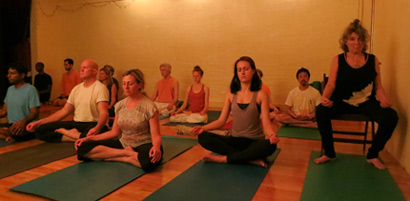
 yogic physical postures mistakenly known as the whole of Yoga today, are only a stepping-stone toward raja yoga*. Practiced correctly, asanas purify the body and nervous system, balance the mental state, and develop the power of concentration. However, asanas are not merely physical exercise. The goal of asana practice is a well-balanced, vibrant mind and body, leading to one-pointed concentration and ultimately, the state of meditation or Yoga. The paramount purpose is to awaken into the True Self—Freedom. This experience can occur when the mind becomes transparent, or purified.
In class, we learn asanas, pranayama, and meditation. These disciplines are carefully introduced according to each practitioner’s condition and stage of development. To practice asana for Self-Realization, one must remain detached from flexibility as a physical benefit.
The Yoga Sutras state: "The sitting posture is to be stable and comfortable." Yoga Sutra II:46 In Sanskrit, asana actually means "sitting posture." When meditation is firmly established, one will no longer need to practice asanas since these are only a means to an end, not the end itself. Practitioners should finish asana practice as soon as possible.
Throughout daily life, it is indispensable to constantly apply the spiritual teachings of Yoga. For the serious practitioner, raja yoga means a commitment to live out its teachings.
*Raja yoga is the path of Yoga that leads to the Realization of the True Master (True Self) by controlling prana (vital energy) and restraining the mind’s activity through meditation. The practice of raja yoga is the renunciation of nature—the negation of dualistic conditions that are internal and external to the mind and body, such as likes and dislikes, heat and cold.
<— BACK |
TOP OF PAGE |